
3D Printing of low-cost cast metal parts
作者:Shenzhen Seetop Technology Co.,Limited
浏览:
发表时间:2020-01-13 00:16:21
Introduction
Castable FDM patterns, when used in conjunction with the investment casting process, can be used to produce large metal parts at very low cost, with features that would not be possible using traditional manufacturing techniques.
This article explains the benefits of using FDM 3D printed patterns and provides a framework for decision making on when to use this process over alternative methods, like DMLS, SLM, or CNC.
Metal part manufacturing
For low volume production of metal parts investment casting, CNC machining and DMLS are all viable solutions. The advantages of each method of manufacturing are summarised and compared below. More details on each method can be found further down in this article. It’s important to note that everything is ultimately dependent on the geometry of the design and the table does not always apply. It’s intended as a general guideline for decision making.A cost comparison of each of the technologies shown above is illustrated in the table below. 3 different parts were compared, each with varying geometries. All quotes are for parts made from stainless steel. All parts are approximately 150mm x 130mm x 55mm in size.
| CNC | DMLS | Investment casting (3D printed pattern) | |||||||
|---|---|---|---|---|---|---|---|---|---|
| Number of parts | 1 | 5 | 25 | 1 | 5 | 25 | 1 | 5 | 25 |
 | $2,705 LT: 3 days | $11,610 LT: 5 days | $51,350 LT: 7 days | $1,990 LT: 7 days | $9,200 LT: 7 days | $45,800 LT: 14 days | $105 LT: 14 days | $480 LT: 14 days | $2260 LT: 21 days |
 | $730 LT: 3 days | $3,400 LT: 4 days | $16,100 LT: 10 days | $2,555 LT: 7 days | $12,115 LT: 14 days | $59,925 LT: 14 days | $140 LT: 14 days | $632 LT: 14 days | $3100 LT: 21 days |
 | $660 LT: 3 days | $3,000 LT: 4 days | $14,300 LT: 10 days | $1,760 LT: 7 days | $8,130 LT: 14 days | $39,980 LT: 14 days | $160 LT: 14 days | $720 LT: 14 days | $3390 LT: 21 days |
Using 3D printing to produce metal parts
DMLS
DMLS is a powder bed fusion technology that is used to produce metal parts to a high level of dimensional accuracy. The additive nature of 3D printing means that very complex designs are able to be created. The design freedom offered by DMLS has seen it adopted by many industries (automotive and aerospace) where weight optimisation and performance are critical (the cost of operating a commercial aircraft is roughly €1000/kg meaning any weight saving result in significant savings in operation costs). This has seen these industries willing to justify the high per part cost of DMLS based on the cost savings of producing complex lighter parts. It is always advisable to compare the cost of using a 3D printing service provider and buying your own metal 3D printer.
DMLS can produce parts from a large range of metals including aluminium and stainless steel as well as exotic biocompatible materials used in dentistry and medical industries like titanium. The main limitations of DMLS are the high cost, small build size and long lead times compared to other 3D printing technologies. Parts also require support material to limit the likelihood of distortion and warping occurring and this must also be removed after printing further increasing lead time and cost.

Investment casting
The investment casting process traditionally uses wax patterns to produce molds for casting, as it has a very clean burn-out with no residues. The image below presents the process.

For low-run investment casting, patterns are traditionally machined from a wax block via CNC. Alternatively, for larger series, a die is machined and the patterns are created by casting the wax using the die. Tooling is a very expensive investment with production of the dies often taking a very long time (2 - 6 weeks).
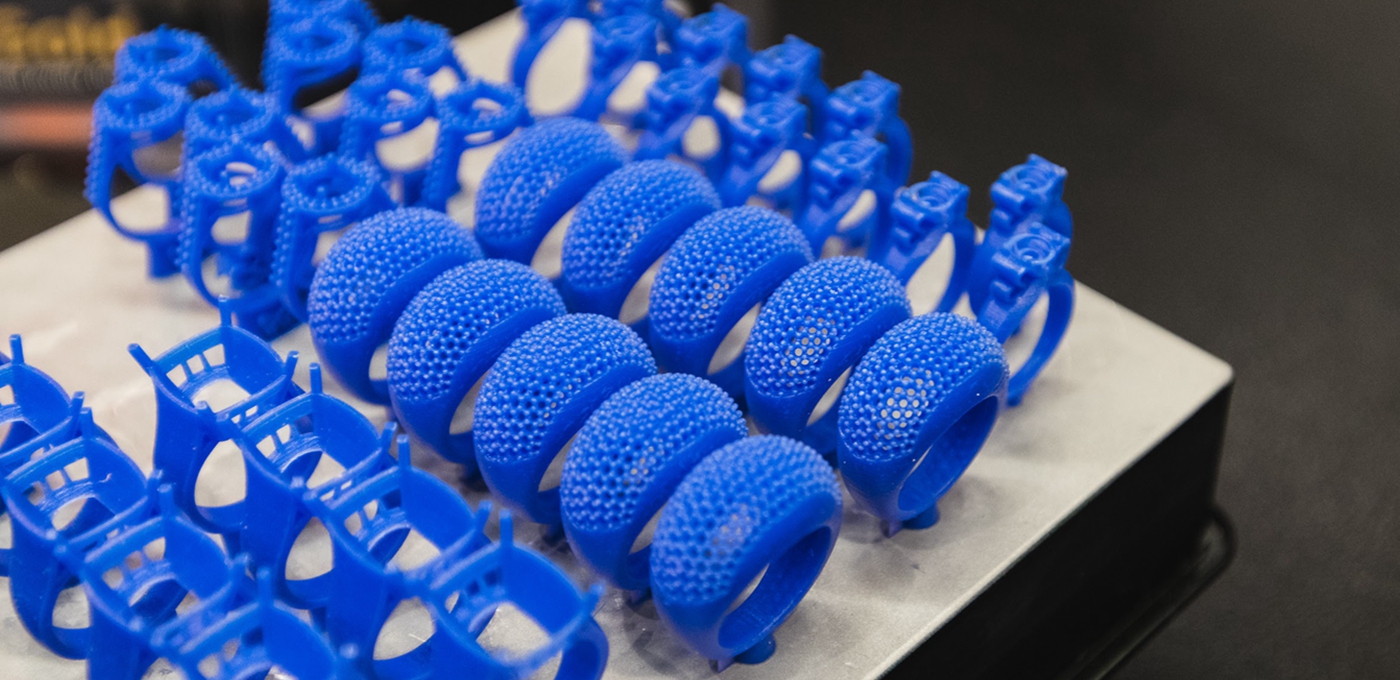
3D printing is now regularly used in conjunction with a range of investment casting applications to produce patterns from castable materials. Castable 3D prints are commonplace in the dental and jewelry industries and are generally produced via the SLA / DLP printing process. This is a vat-photopolymerization technology that is able to produce parts with a very smooth surface and extremely fine details. The main limitation around SLA is the printer build volume size, or the high cost involved for larger patterns. For larger metal parts, castable FDM offers a cost effective, rapid solution.

Castable FDM
For larger parts, creating patterns via SLA no longer becomes feasible due to the high cost of resin and the build volume of most SLA machines. Castable FDM offers a low-cost solution allowing parts to rapidly be printed. FDM is a material extrusion technology. After printing, the surface of the parts are smoothed via micro-droplet polishing resulting in patterns with very smooths surfaces (a requirement for a high quality investment cast).

Shortcuts of technology
SLS – Selective Laser Sintering
This was the first technology of its kind, developed in 1992 by a company named DTM (now acquired by 3D Systems, which also owns SLS trademark). When people refer to SLS 3D printers, they usually also refer to 3D printers from other companies, like EOS.
DMLS – Direct Metal Laser Sintering (EOS)
In broader terms, DMLS is quite similar to Laser Sintering mentioned above. However, as the title suggests, DMLS is optimized for 3D printing metals and alloys. (And to confuse you a little bit further, DMLS usually melts the powder).
SLM – Selective Laser Melting (SLM Solutions)
This technology is used for 3D printing various metals via laser melting. Other companies such as Renishaw use a very similar concept.
LaserCUSING – (Concept Laser)
3D printing technology for printing metal parts via laser melting (cusing means the same as melting).
DMP – Direct Metal Printing (3D Systems)
3D printing technology for printing metal parts via laser melting.
EBM – Electron Beam Melting (Arcam)
3D printing technology for printing metal parts via electron beam melting.
SHS – Selective Heat Sintering (developed by Blueprinter)
3D printing technology for printing plastic parts. Using thermal print head, instead of a laser, to sinter the plastic powder.


86-13143415646
Contact:
 Tel: 86-755-23000620 Fax: 86-755-23000621
 Email:info@galaxy3dm.com/info@seetoptech.com
 Address: A3 , Dingfeng Industrial Zone, Fuyong Town, Shenzhen, China
Galaxy 3D Manfacturing Solution
Copyright (©) 2020 Shenzhen Seetop Technology Co.,Limited
